How I Run 23 AI Steps in Production on AWS Serverless
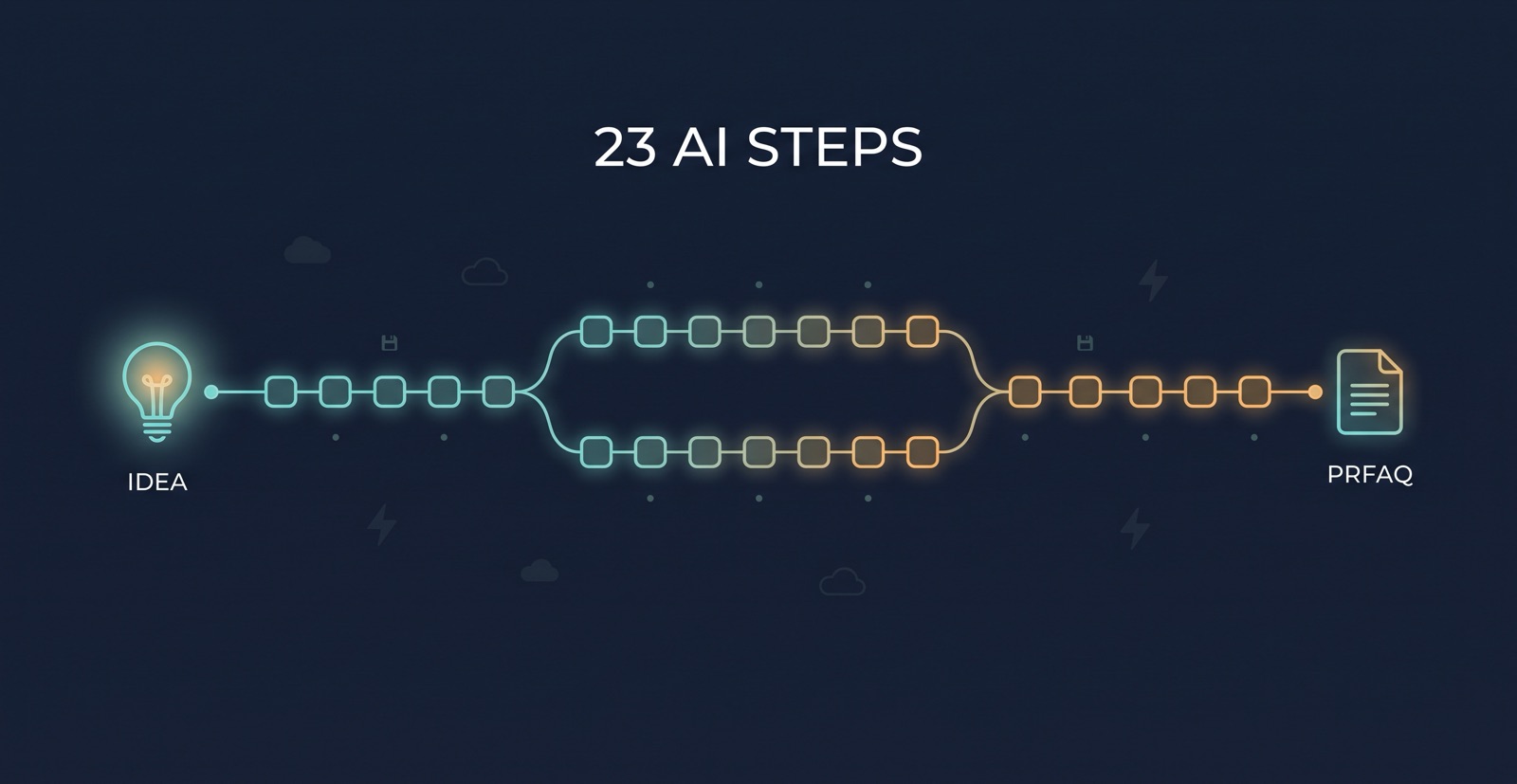
One product idea goes in. 23 chained Claude calls come out: personas, hypotheses, simulated customer interviews, press release, PRFAQ. That’s WorkBack AI, and it’s live in production with no server to patch, scale or pay for while it’s idle.
Everyone’s talking about autonomous agents. I went the other way: a plain workflow made of three patterns.
Three patterns, not an agent
1. Prompt chaining. Each step reads only the outputs of the steps it depends on. Small, focused context beats one giant prompt.
2. Parallel batches. The customer discovery interviews run as 2 parallel batches of 6, and each batch gets a different demographic segment. Ask a model for 12 interviewees in one go and you get 12 people who sound alike. Splitting by segment forces real variety, and parallel calls cut the wait.
3. Aggregation. A final call reads every batch and writes the summary: pivots, learnings, and where to recruit real interviewees.
What keeps it dependable
- Structured output. Every step returns schema-constrained JSON, not free text I have to parse.
- Checkpointing. Each step saves before the next starts, so a failure never costs the whole run.
- Resumable runs. A full run outlasts Lambda’s 15-minute limit, so it hands off to a fresh invocation at a step boundary and carries on.
- Cost caps. Every project has a hard AI budget, so spend per run is predictable.
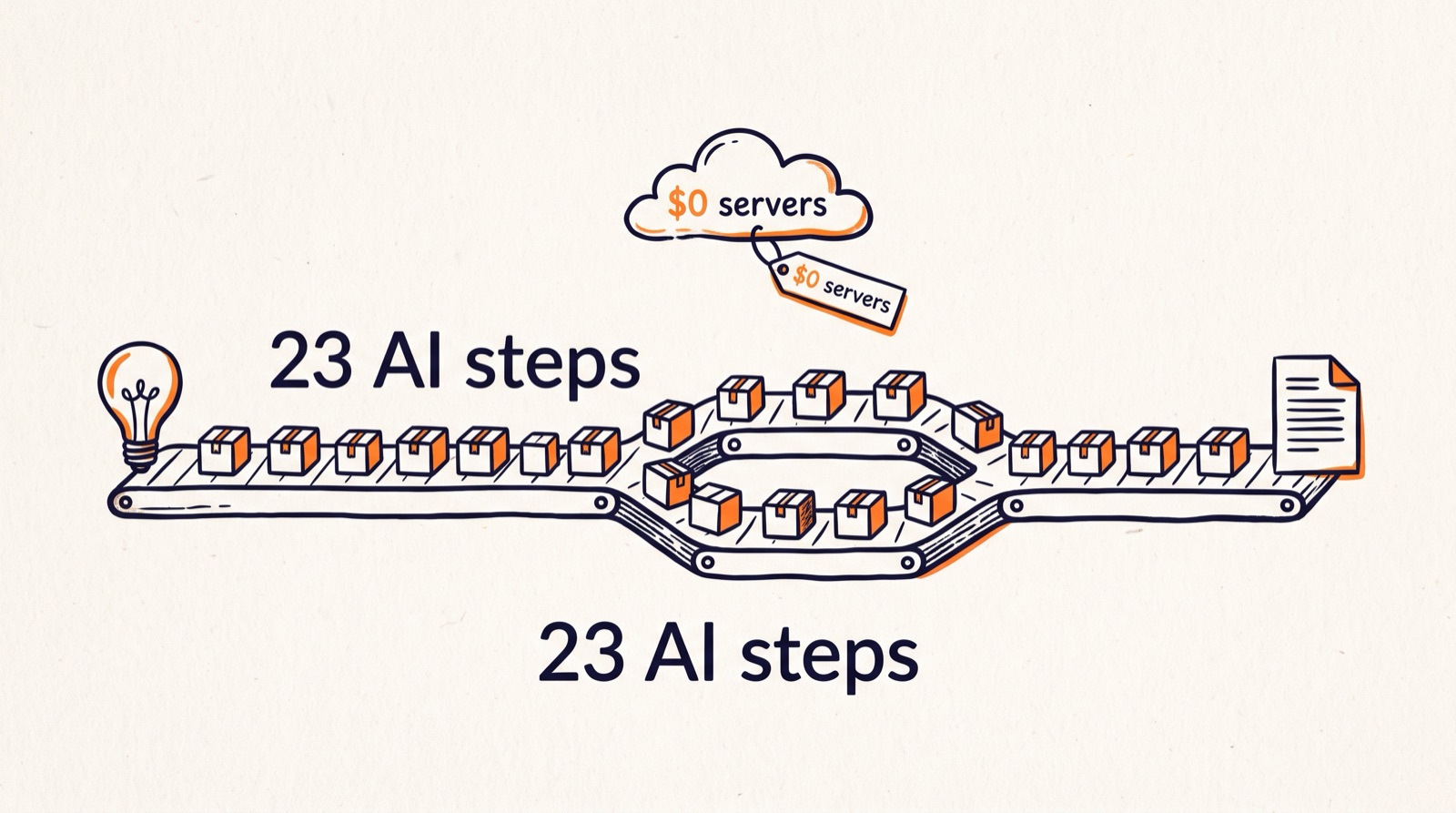
The stack is AWS Lambda, API Gateway and DynamoDB on the backend, with Cloudflare Pages for the frontend. Infrastructure cost is close to zero; the only meaningful cost is the AI calls themselves.
The takeaway
Before reaching for an agent, ask whether a chain with a bit of parallelism would do the job. It’s easier to debug, cheaper to run and easier to resume.
Try it at workbackai.com.